
Recency Bias: Why Your Last Trade Is Lying to You

A trader may increase position size after three consecutive wins. But the same trader may hesitate when the same setup appears after a loss, or abandon a strategy after three losing trades despite its profitable record over the previous fifty.
These reactions make a small and “recent sample” feel more important than the larger body of evidence. This pattern is known as recency bias in trading. It is a cognitive bias that can influence position sizing, strategy selection, and confidence.
Recency bias reflects the tendency to give disproportionate weight to recent outcomes. The article examines how this bias appears in live trading, how it differs from legitimate market adaptation, and how trade outcomes can be evaluated alongside process and observable market conditions.
What Recency Bias Actually Is
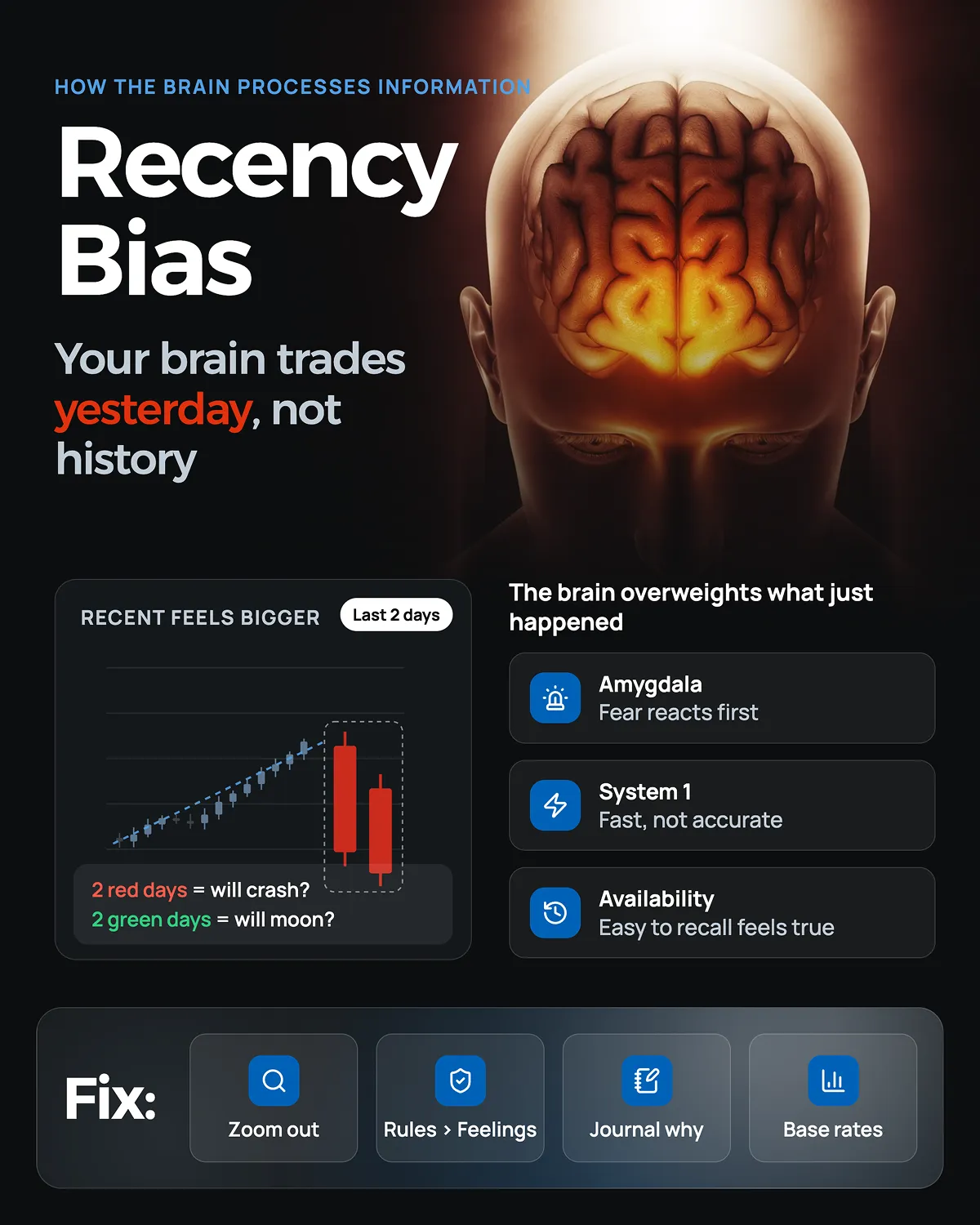
Recency bias, or last trade bias in trading, is the tendency to give too much importance to the latest piece of information while giving less weight to the larger pattern. Due to this bias, the result of the most recent trade is treated with more importance than it statistically deserves.
The following two hypothetical scenarios illustrate the effect:
| Scenario I: Consecutive Winning Trades | Scenario II: Consecutive Losing Trades |
|
|
In both cases, a small sample size is given more weight than the broader trading record. Recency bias trading differs from:
- “Revenge trading”, where a loss can trigger emotionally driven trades, and
- “Overtrading”, which refers to excessive trading activity.
In comparison, recency bias is about changing beliefs or decisions too much because of recent results. As a form of trading cognitive bias, this bias can distort how traders interpret strategy performance, market conditions, and even their own skill.
Why the Brain Overweights the Last Trade

Recency bias in trading is partly linked to how the brain processes information. Recent and vivid events are easier to remember, so they can feel more important or representative than they actually are. This is known as the “availability heuristic”. Consequently, a recent win or loss can influence trading decisions more than a larger set of past results.
Loss aversion can make this effect stronger because losses generally have a greater psychological impact than equivalent gains. Therefore, a “recent loss” may seem like stronger evidence that a strategy has stopped working. This view can be developed even when the broader trading record does not support that conclusion. Such a market perception contributes to last trade bias and other forms of trading cognitive bias.
Importantly, recency bias is not a character flaw. It is a common feature of human cognition. Market participants can avoid such a bias by following a “process-based approach”, which can separate recent outcomes from the larger sample and current market evidence.
The following comparison illustrates the distinction:
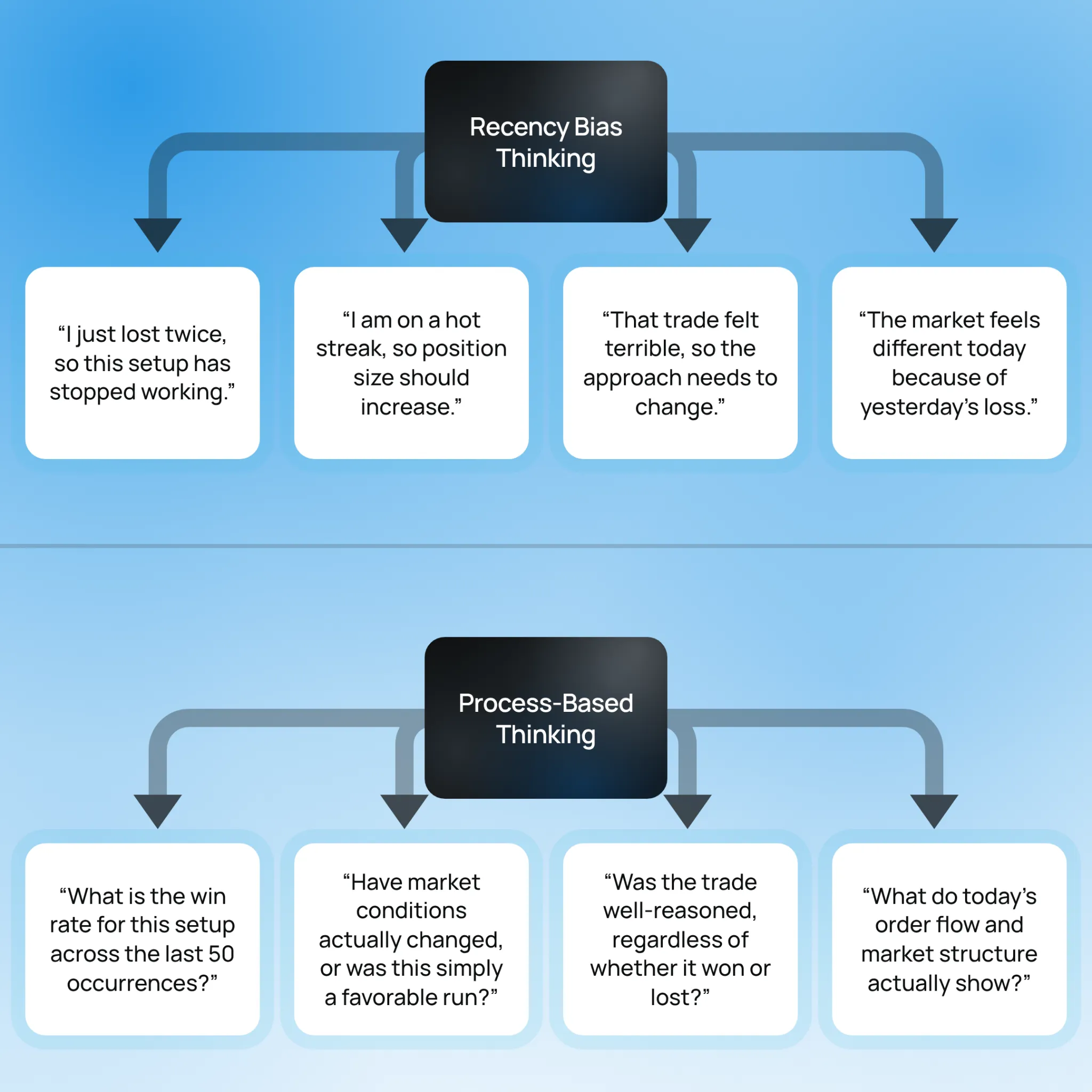
As per behavioral finance trading, even a small number of recent outcomes can create a misleading picture of strategy performance. Thus, market participants may examine a “larger sample” to separate a genuine change in market behavior from normal short-term variation.
How Recency Bias Shows Up in Live Trading
Several patterns show how psychological bias can turn short-term results into decisions about:
- Position size,
- Strategy selection, and
- Market preference, even before enough evidence exists to support those changes.
The following patterns illustrate how recency bias appears in live trading:
| How Recency Bias Appears | What Happens | Why It Can Be Misleading |
| Oversizing After a Win |
|
|
| Undersizing or Hesitating After a Loss |
|
|
| Abandoning a Strategy After a Losing Streak |
|
|
| Chasing Another Setup or Instrument |
|
|
Build your market read from observable participation rather than your last result. Explore Bookmap’s market visualization tools.
One Trade Isn’t Data: The Sample Size Problem

A trading strategy with a genuine edge can still produce three, five, or more losses in a row. This might happen because individual outcomes are affected by normal market variation. Therefore, a short losing streak does not automatically indicate that the strategy has stopped working.
Similarly, a single winning trade provides very little evidence that a strategy has gained an edge. A proper assessment requires a larger sample size, which usually involves tens or hundreds of trades. It is only after examining such a large sample that the overall pattern becomes more visible.
This is where recency bias trading becomes a problem. The latest trade is emotionally noticeable, but it represents only a tiny part of the available evidence. “Overweighting” recent trades can therefore replace a large and useful sample with one or two outcomes that may only reflect normal variance.
Last trade bias can distort how strategy performance is interpreted. A recent result may feel disproportionately important simply because it occurred most recently. At the same time, market participants may ignore the larger trading record, which provides a stronger basis for evaluating whether an edge has actually changed.
Recency Bias vs. Legitimate Adaptation
Not every reaction to a recent trade is recency bias. Market conditions can genuinely change due to several factors:
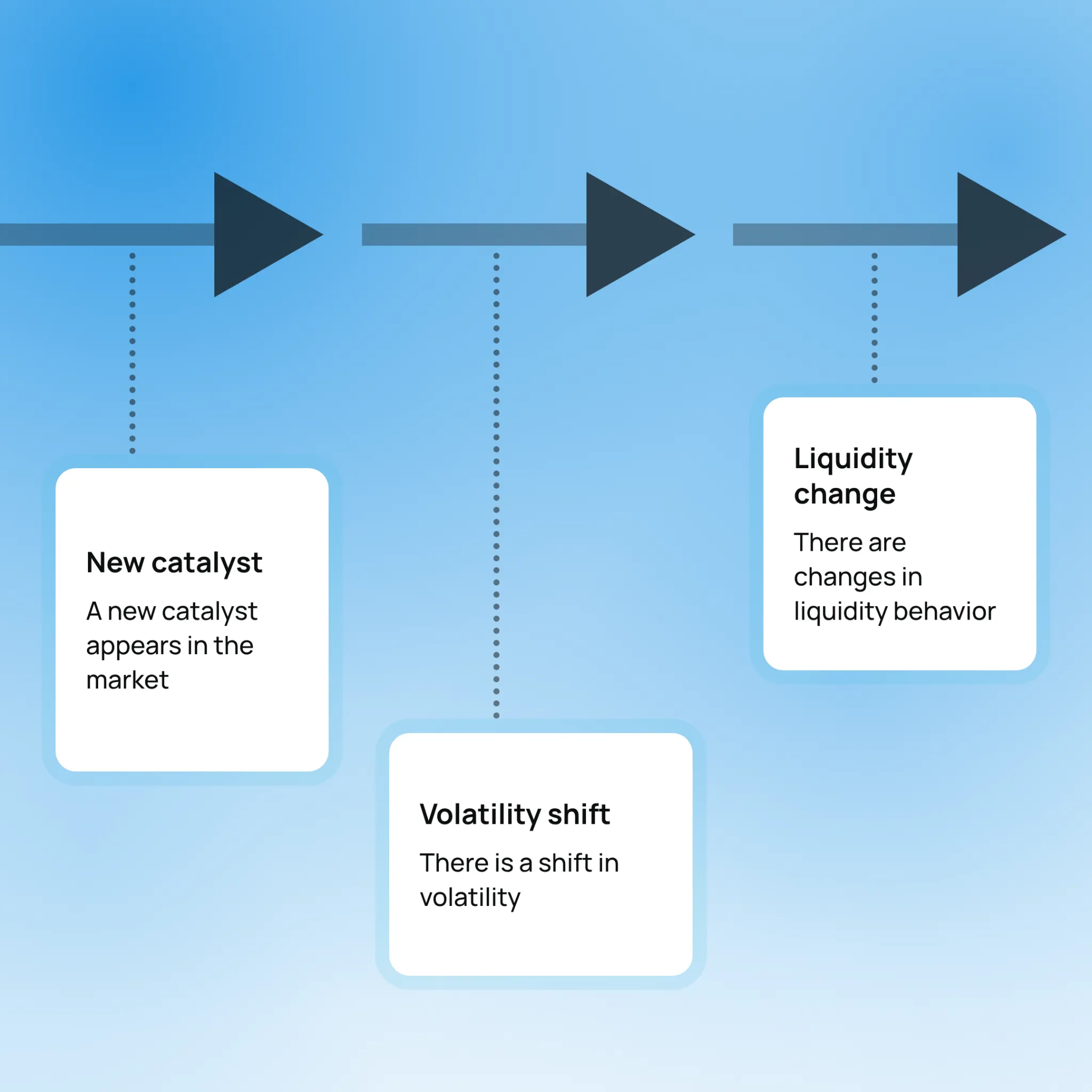
In such cases, adapting to new evidence can be part of sound trading decisions. In this context, market participants may focus on the cause of the change in thinking. Recency bias reacts primarily to the result of the last trade, whether a win or a loss. In comparison, legitimate adaptation responds to observable changes in market structure, participation, or volatility.
Therefore, an important question is:
- Is the response driven by the previous trade, or by observable current market conditions?
A Quick Self-Check Before Changing Course
Before abandoning a strategy or changing its position size after a recent result, three questions can help separate trading psychology bias from genuine market evidence:
| Question I: Has Market Structure or Market Conditions Actually Changed? | Question II: Is the Sample Size Large Enough to Support a Conclusion? | Question III: Is the Reaction Based on the Outcome or New Evidence? |
|
|
|
This distinction prevents last trade bias from being mistaken for legitimate adaptation while still allowing trading decisions to respond when market conditions genuinely change. Price shows what happened. Order flow can provide more clues about why. Compare Bookmap packages.
How to Catch Recency Bias in the Act
Reducing recency bias requires a process that limits decisions based on the last trade. It is advisable that position-sizing rules be defined before a trading session begins. This reduces the likelihood that a recent win or loss will disproportionately influence position sizing during the session.
Additional techniques include:
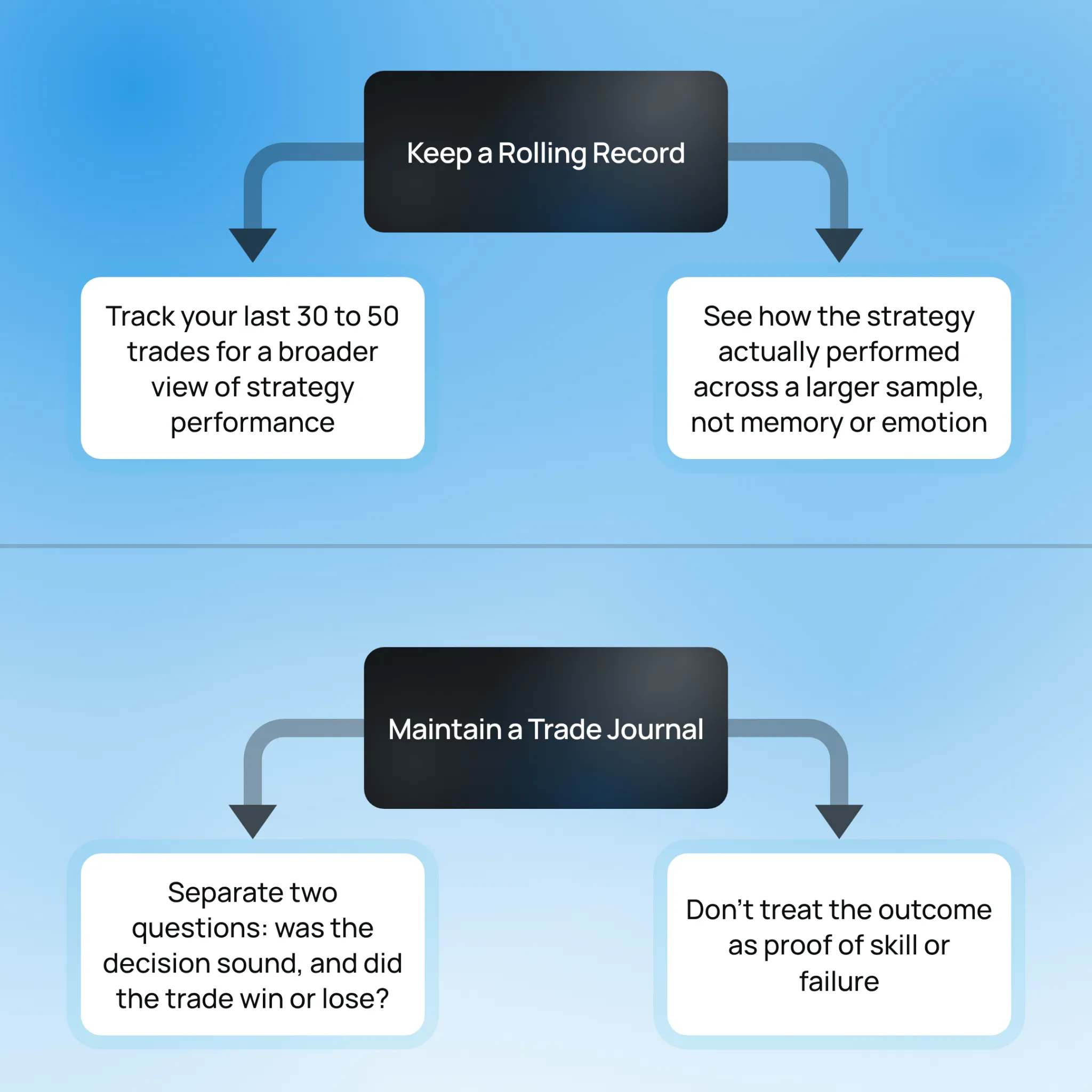
The goal is not to ignore recent information. Rather, overweighting recent trades is the problem. Thus, recent results should be considered alongside the broader trading record and other available evidence.
Watching Conditions Instead of Outcomes
Recency bias can become stronger when there is no clear view or understanding of what is happening in current market conditions. A lack of market awareness can leave the traders with only the latest win or loss as the primary evidence. Consequently, this piece of evidence can significantly influence the interpretation of the next trade.
Here, Bookmap can be used to gain a deeper understanding of the market. Using it, market participants can:
- Deeply analyze the order flow, and
- Gain information about whether conditions have actually changed.
The following observations can be evaluated using Bookmap:
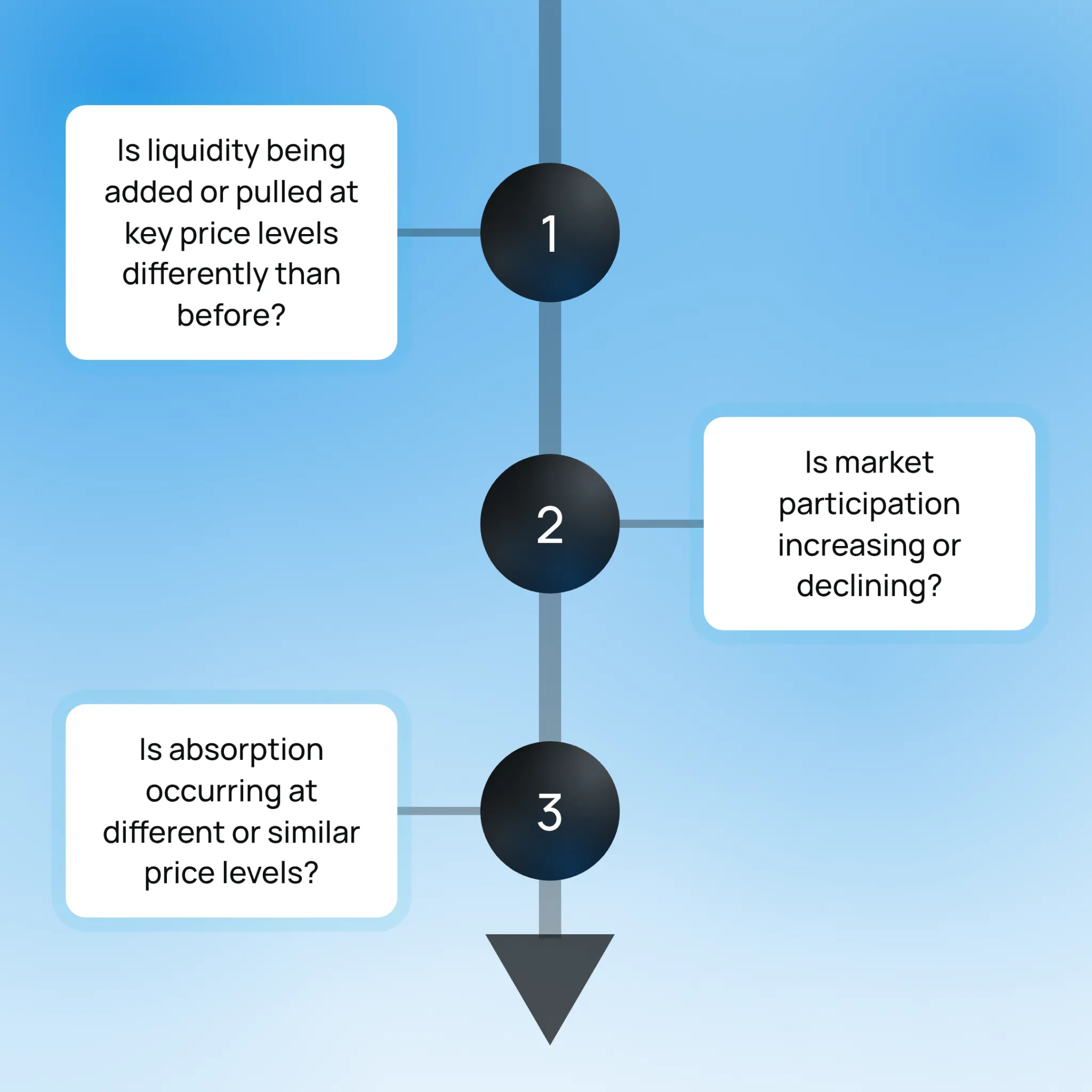
These observations can separate a genuine change in market behavior from recency bias. The purpose is not to predict what the market will do. Instead, it is to give traders current market evidence that can be evaluated alongside the larger trading sample. This may potentially protect market participants from reacting only to the emotional impact of the last result.
Conclusion
Recency bias is a normal feature of how the brain processes recent information. However, giving too much weight to the latest win or loss can distort how strategy performance and market conditions are judged.
The solution is not simply greater willpower. To control recency bias, traders can follow predefined position-sizing rules. These can reduce emotional changes after a recent result. At the same time, a large enough sample size can be used to put individual trades into proper context.
Additionally, separating the quality of a trading decision from its outcome can also prevent a profitable trade from being mistaken for a good decision or a losing trade from being treated as proof of failure.
Ultimately, the last trade is one data point. It is not a verdict on a strategy, skill, or future market behavior. Good trading decisions start with better evidence. See how Bookmap helps traders observe liquidity and order flow in real time.
FAQs
1. What is recency bias in trading?
Recency bias in trading occurs when the latest trade or a short series of trades receives more importance than the overall trading record. For example,
- Two recent losses may make a strategy appear “ineffective.”
- This can happen even when it has performed well over the previous 50 trades.
- Similarly, several wins may create too much confidence.
The issue is not considering recent results. Instead, it is giving them more weight than the available evidence supports.
2. How is recency bias different from revenge trading?
Revenge trading usually happens after a loss when frustration or the desire to recover money leads to impulsive decisions, such as taking larger or poorly planned trades. Recency bias is broader and does not require anger or frustration.
A recent loss can cause hesitation or strategy changes, while a recent winning streak can lead to unnecessary position increases. Therefore, recency bias can influence decisions after both wins and losses.
3. Why do traders size up after a winning streak?
A series of winning trades can create the impression that a strategy or trading setup is working exceptionally well. However, a short winning streak may occur through normal statistical variance and may not prove that skill or strategy performance has improved.
When recent wins are given too much importance, traders may increase position size before there is enough evidence from a larger sample size to support that change.
4. How many trades are needed to evaluate a strategy fairly?
There is no single number that works for every strategy. As per general market understanding, the size of the required sample depends on several factors, such as:
- Trading frequency,
- Market conditions, and
- The strategy’s expected win rate.
However, one or two trades provide very little information. Results from dozens or hundreds of trades can give a better picture because individual wins and losses have less influence on the overall record. A larger sample also makes it easier to distinguish normal variance from a genuine change in performance.
5. How can traders reduce the effect of recency bias?
Traders may follow several good habits or practices to reduce the influence of recency bias in trading, such as:
- Position-sizing rules can be defined before trading begins so that a recent win or loss does not determine the next position size.
- A rolling record of recent trades can provide actual market data and save traders from solely relying on memory.
- Journaling can also separate the quality of the trading decision from its outcome.
Together, these habits may help in placing the latest trade in the context of the broader trading record.
 Twitter
 Facebook