
What the Bid-Ask Spread Really Tells You About a Market

The bid-ask spread appears as a small gap between the best available buying and selling prices. However, it can reveal a great deal about what is happening under the price action.
Most traders glance at the bid-ask spread only to estimate trading costs and then move on. By doing so, they miss the information it carries about liquidity, uncertainty, and market risk. Generally, a narrow spread reflects an “active” two-sided interest, while a widening spread may signal thinner liquidity or rising uncertainty.
This article explains what the bid-ask spread is, why spreads exist, and what narrow and wide spreads indicate. The article also dissects why the spread widens and how spread behavior relates to market depth and liquidity.
What the Bid-Ask Spread Actually Is
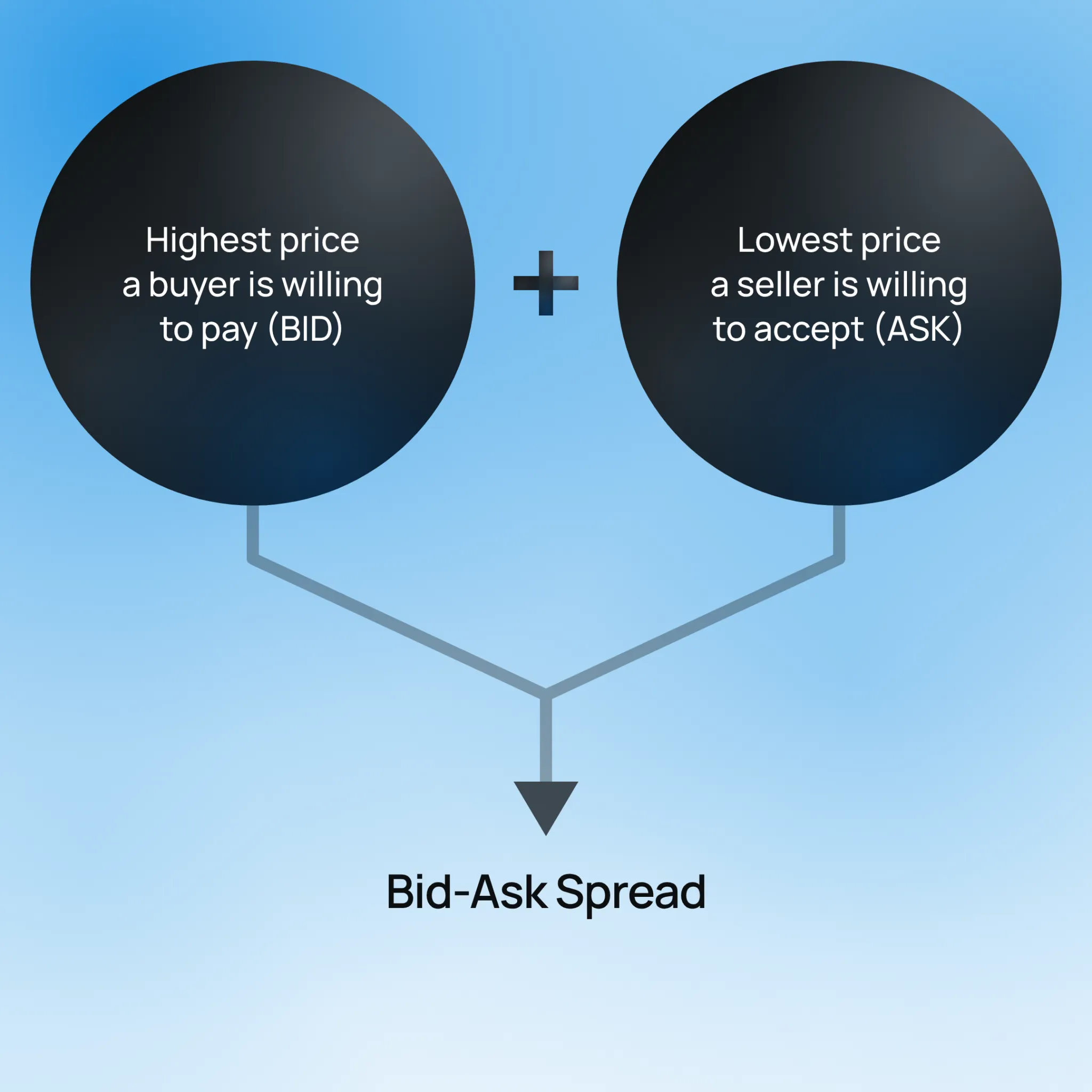
The bid-ask spread is the difference between the highest price a buyer is willing to pay and the lowest price a seller is willing to accept. The buyer’s price is called the “bid,” while the seller’s price is called the “ask or offer.”
In an order book, this difference appears as a minor visible gap between the buying and selling sides. For a trade to be executed at a new price, this gap must be crossed. The size of this gap also provides an initial indication of the available liquidity in a market.
The spread is a headline. The depth behind it is the story. Explore Bookmap’s market visualization tools.
Why Spreads Exist in the First Place
Market makers and liquidity providers quote both bid and ask prices so that buying and selling can take place. However, quoting both sides exposes both parties to risk because the market price can change while an asset remains in their inventory.
The bid-ask spread provides compensation for this risk and the cost of holding that inventory. Therefore, the spread size is not arbitrary. Generally, the spread becomes wider when a market maker sees:
- Greater price uncertainty,
- Lower liquidity, or
- Higher inventory risk.
In contrast, stable trading conditions and strong liquidity can support a narrow bid-ask spread.
Market participants may therefore view the spread as more than merely a trading cost. It can also offer information about the level of risk and liquidity present in the market at a given time.
What a Narrow Spread Usually Means
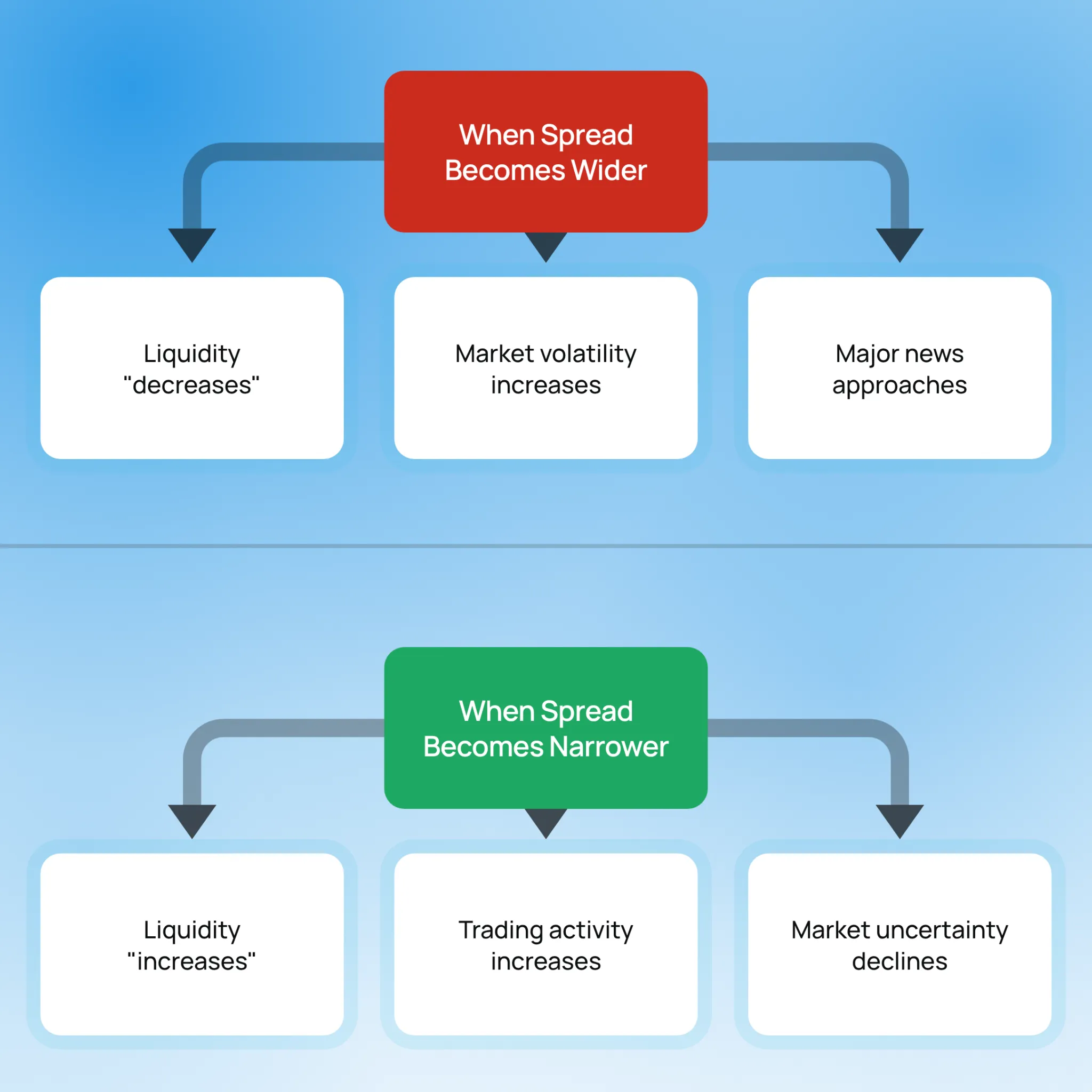
A narrow bid-ask spread generally indicates that a market has strong liquidity, with many buyers and sellers actively quoting prices on both sides. With strong two-sided liquidity, market makers can usually manage their inventory risk with less concern about large price movements.
For example:
- Heavily traded index futures during regular market hours may have narrow spreads.
- This may reflect high trading activity and strong two-sided interest.
- Similarly, major currency pairs can show narrow spreads during active trading periods.
However, a narrow spread is not a universal sign of low risk. Spread levels can change with market conditions, trading hours, and sudden price movements.
What a Wide Spread Usually Means
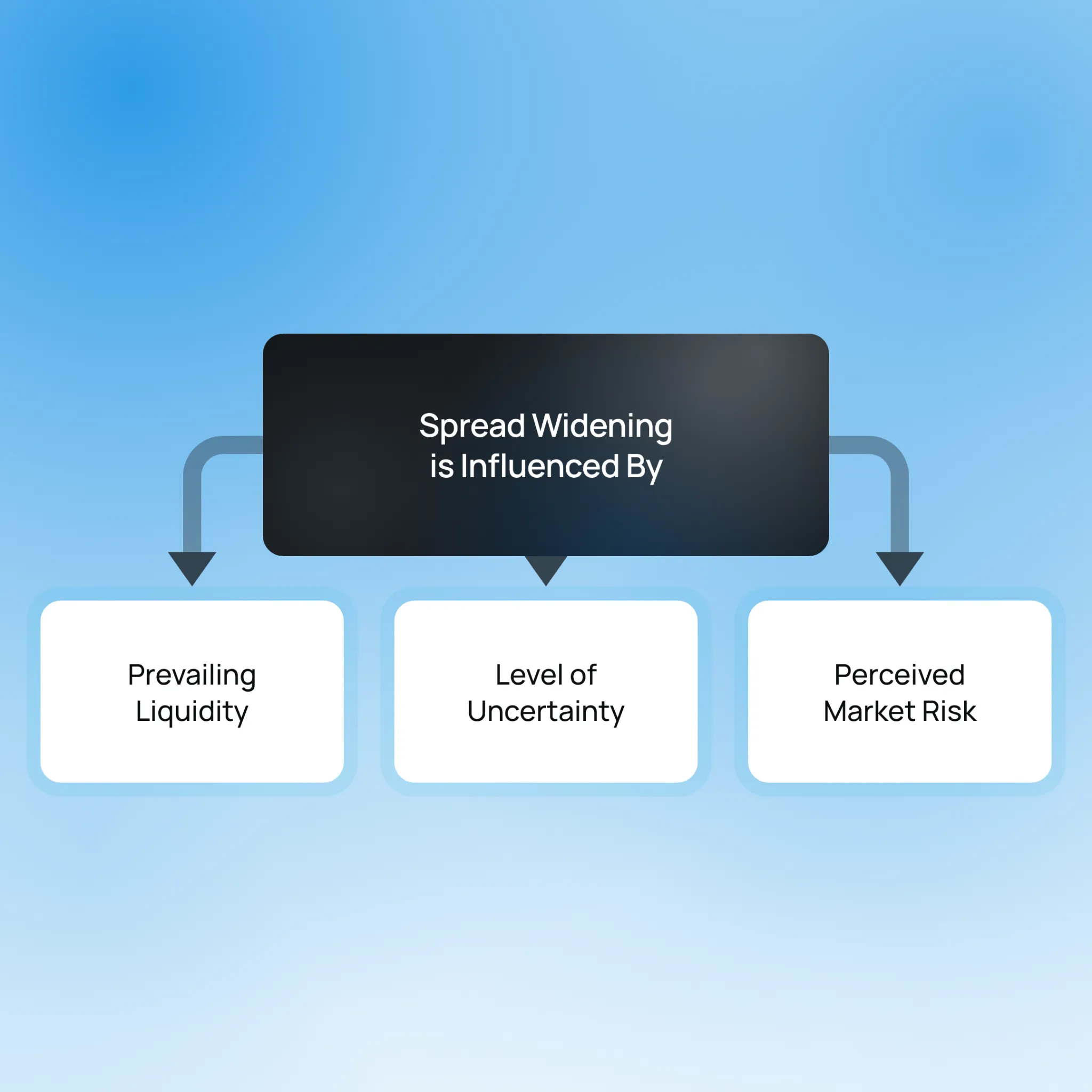
A wide bid-ask spread is generally associated with:
- Lower liquidity,
- Less certainty about an asset’s fair value,
- Higher risk for market makers and other liquidity providers.
With fewer buyers and sellers quoting close prices, a larger gap can develop between the bid and ask. Therefore, spreads usually widen in thinly traded instruments or during low-volume trading hours. At the same time, they can also widen just before or during major economic news when prices may change sharply, and the fair value becomes harder to estimate.
During periods of high volatility, market makers may reduce their quoted size or move prices further apart to limit the risk of being filled just before an adverse price movement. Such actions may cause the spread to become wider.
Price shows what happened. Order flow can provide more clues about why. Compare Bookmap packages.
What the Spread Doesn’t Tell You
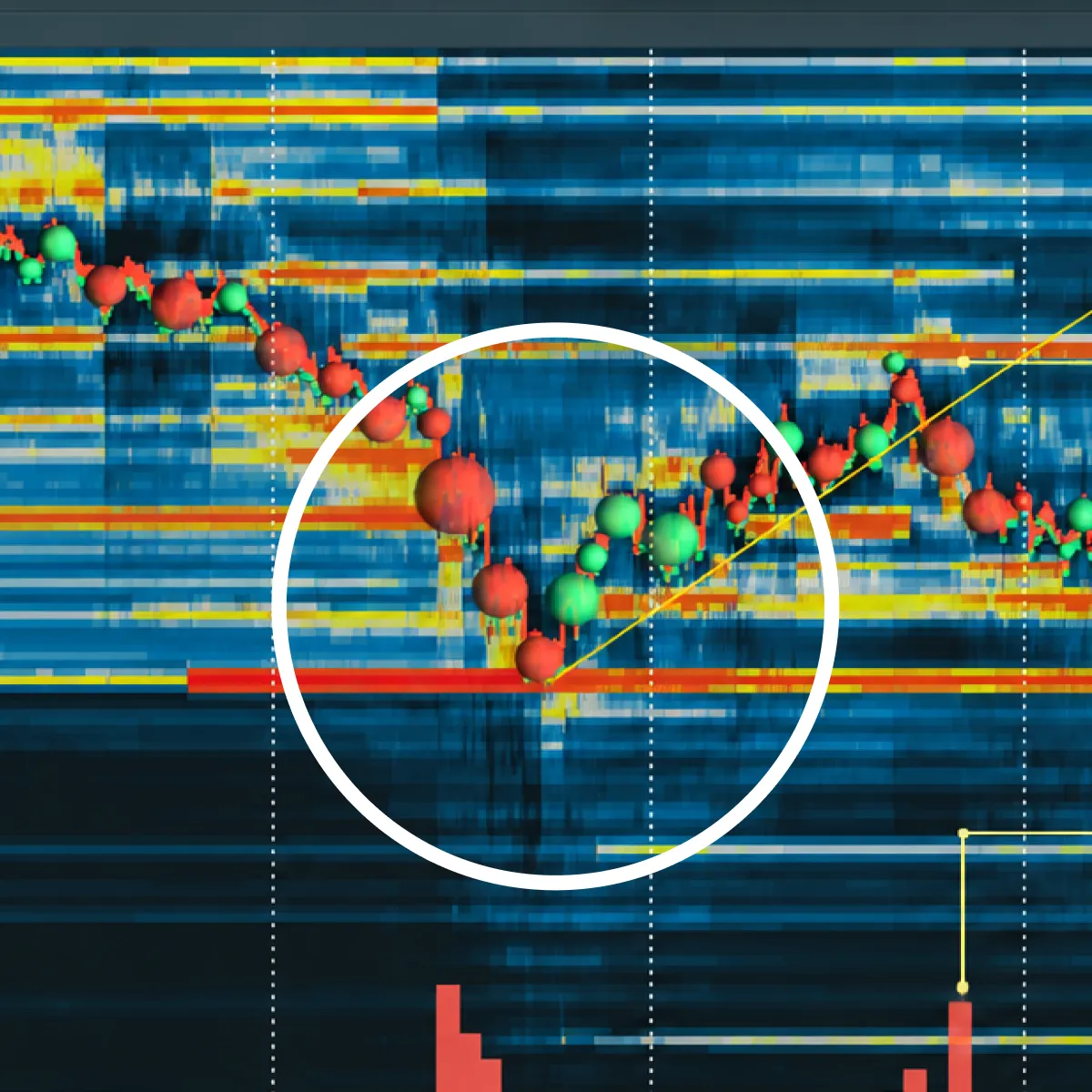
The bid-ask spread shows only the best available bid and ask. It does not show:
- How much buying or selling quantity exists behind those prices, or
- How much liquidity is available at the next price levels in the order book.
Therefore, even a narrow bid-ask spread can exist above a thin order book. A moderately sized order may then consume the available liquidity and cause the spread to widen quickly. The spread width alone therefore does not provide a complete picture of the liquidity available in the market.
The spread does not indicate price direction. A wide bid-ask spread may signal greater uncertainty or risk, but it does not indicate whether the next price movement will be upward or downward. Consequently, spread size alone cannot determine whether a market is suitable or safe to trade.
How the Spread Behaves Around Volatility and News
As market volatility rises or a major news event approaches, market makers may perform either of these two actions:
| Action | What It Means | Reason for the Action |
| A) Widen the Bid and Ask Quotes | Increase the gap between the buying and selling prices. |
|
| B) Reduce Available Quantity at the Quoted Prices | Offer fewer units at the quoted bid and ask prices. |
|
Due to both actions. the bid-ask spread can become wider. This happens because rapid price changes increase the risk of providing liquidity. A tight and deep market becomes harder to maintain when prices can move or gap sharply. In response, liquidity providers usually widen the spread to compensate for the added uncertainty.
However, once the news-driven uncertainty passes and price movements become less volatile, market makers may return with tighter quotes and larger available quantities. Consequently, the wide bid-ask spread moves back towards normal levels.
Reading the Spread Alongside Depth
The bid-ask spread provides a useful “first view” of market liquidity, but it shows only the best bid and offer. It does not reveal how much buying or selling interest is resting behind those prices or at nearby levels.
Here, depth and order flow tools such as Bookmap may add context. Bookmap’s market depth visualization can show the amount of liquidity resting at and around the spread. At the same time, they may observe the order flow data to understand how that liquidity changes as orders are added, cancelled, or executed.
The following table illustrates how Bookmap adds context:
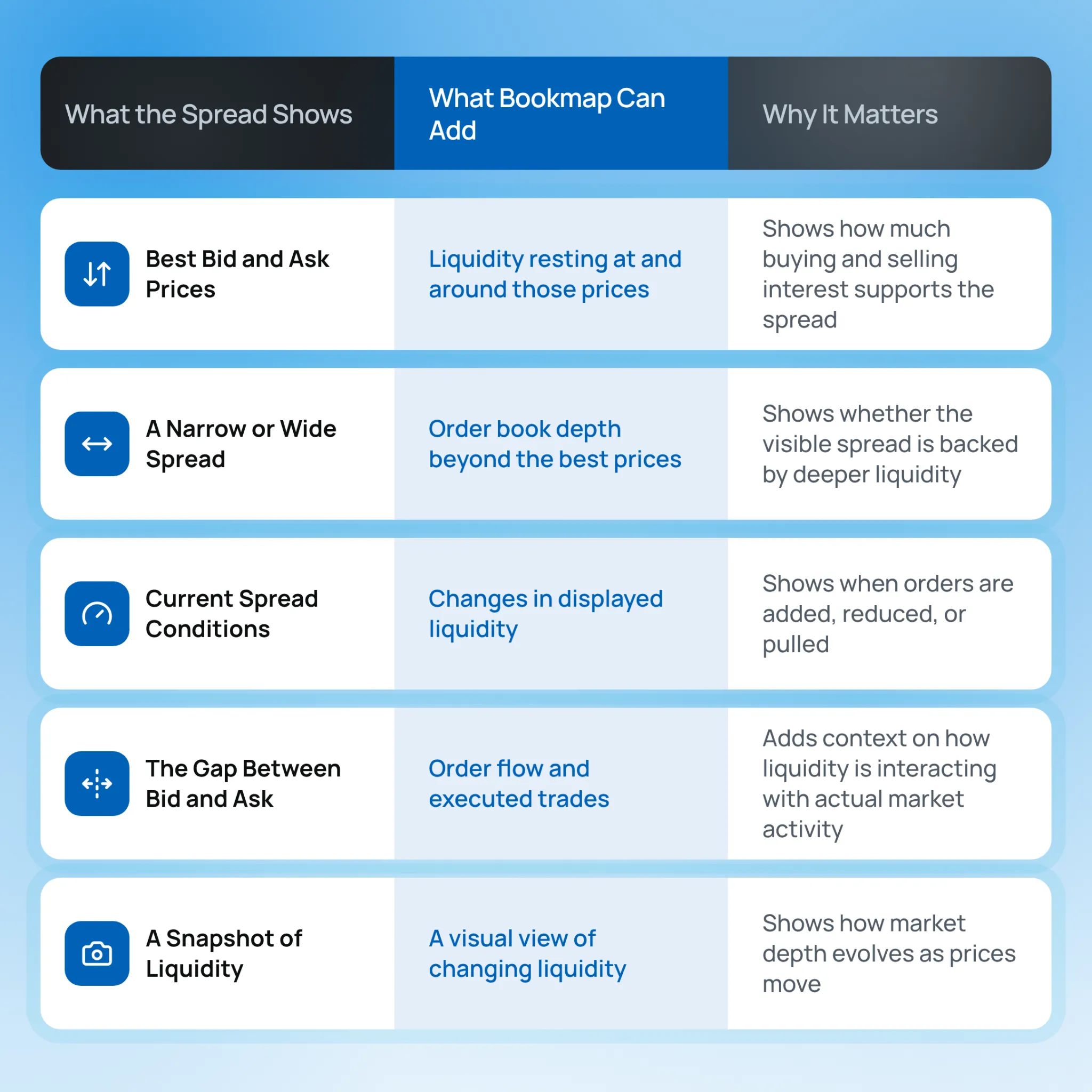
Therefore, a narrow bid-ask spread does not always mean deep liquidity, just as a wide bid-ask spread does not explain the full market condition. By reading the spread alongside market depth, traders can gain a broader view of the liquidity supporting the displayed prices.
Conclusion
The bid-ask spread is more than a gap between the buying and selling prices. It is a “live” market signal that can provide clues about liquidity, uncertainty, and the risk perceived by liquidity providers.
Generally, a narrow bid-ask spread appears when trading activity and two-sided interest are strong. In comparison, a wide bid-ask spread can emerge when liquidity falls, or uncertainty rises. However, spread width alone cannot show how much liquidity exists beyond the best bid and ask, nor can it indicate the direction of the next price move.
Therefore, several market participants read it alongside order book depth and order flow. This combined analysis may indicate how much liquidity is available around current prices and how that liquidity changes as market conditions evolve. Good trading decisions start with better evidence. See how Bookmap helps traders observe liquidity and order flow in real time.
FAQs
1. What is the bid-ask spread in simple terms?
The bid-ask spread is the difference between the highest price a buyer is willing to pay and the lowest price a seller is willing to accept. For example, if the bid is $99 and the ask is $100, the spread is $1 ($100 – $99). It represents the gap between the two sides of a market.
2. Why do bid-ask spreads widen?
A wide bid-ask spread usually appears when market liquidity falls, or uncertainty rises. This can happen during:
- Low trading activity,
- High volatility, or
- Before major news.
In such conditions, market makers face greater risk when quoting prices. Therefore, they may place the bid and ask further apart to account for that additional risk.
3. Does a narrow spread mean a market is safe to trade?
A narrow bid-ask spread usually indicates good liquidity and active trading. But it does not show how much liquidity exists behind the best prices. If the order book is thin, a moderately sized order can consume available liquidity and cause the spread to widen.
4. What is the difference between the bid-ask spread and market depth?
The bid-ask spread shows only the gap between the best available bid and ask. Market depth goes further by showing how much buying and selling quantity is available at those prices and at other nearby price levels.
Therefore, depth provides a broader view of bid-ask spread liquidity and the orders supporting current prices.
5. Can the bid-ask spread predict market direction?
No, the spread does not indicate whether prices are likely to increase or fall. A wide bid-ask spread may show lower liquidity or greater uncertainty, while a narrow spread may indicate stronger liquidity.
However, neither provides a directional signal by itself. Traders may require other market information to assess price movement.
 Twitter
 Facebook