
Why Elite Traders Obsess Over Process, Not P&L

Many traders judge trading performance only by daily profit and loss. They fail to realize that even a profitable trade can result from poor decisions, while a losing trade can reflect flawless execution. Such an attitude shifts attention away from the trading behaviors that create lasting success.
If we talk about the approach of professional traders, most of them build consistency by refining their decision-making process (instead of chasing perfect predictions or bigger wins). Over time, this disciplined approach leads to better execution and risk management.
Read this article to learn why the trading process matters more than daily profits and how process-over-outcome trading develops trading consistency. Also, understand what separates the professional trader mindset, and how review, accountability, and feedback may contribute to long-term trading success.
Why P&L Is One of the Worst Daily Performance Metrics
Profit and loss (P&L) is usually the first number traders check after the market closes. However, it is only a result of completed trades (not a measure of the quality of the trading process). It shows what happened but does not explain why that outcome occurred.
Market participants may realize that markets work on probabilities. Let’s study these two scenarios:
| Scenario I: A Disciplined Trader Incurred Loss | Scenario II: A Novice Trader Made a Profit |
|
|
Consequently, judging performance only through daily P&L can create poor trading psychology. Bad decisions may appear successful after a few profitable trades and cause those mistakes to become repeated habits. At the same time, good decisions may be abandoned after a short losing streak, even though they support long-term trading consistency.
A useful comparison comes from poker. Professional players know that a well-played hand can still lose because every outcome involves probability. Therefore, experienced players review whether the decision was correct based on the information available at that moment.
The same principle supports “process over outcome” trading. It reflects the mindset of a professional trader, for whom decision quality carries more value than short-term profits.
The Common Thread Between Elite Traders, Athletes, and Poker Players
Elite performers in trading, sports, chess, and poker share a common approach. They judge performance by the quality of execution instead of short-term results. Let’s study some examples for more clarity:
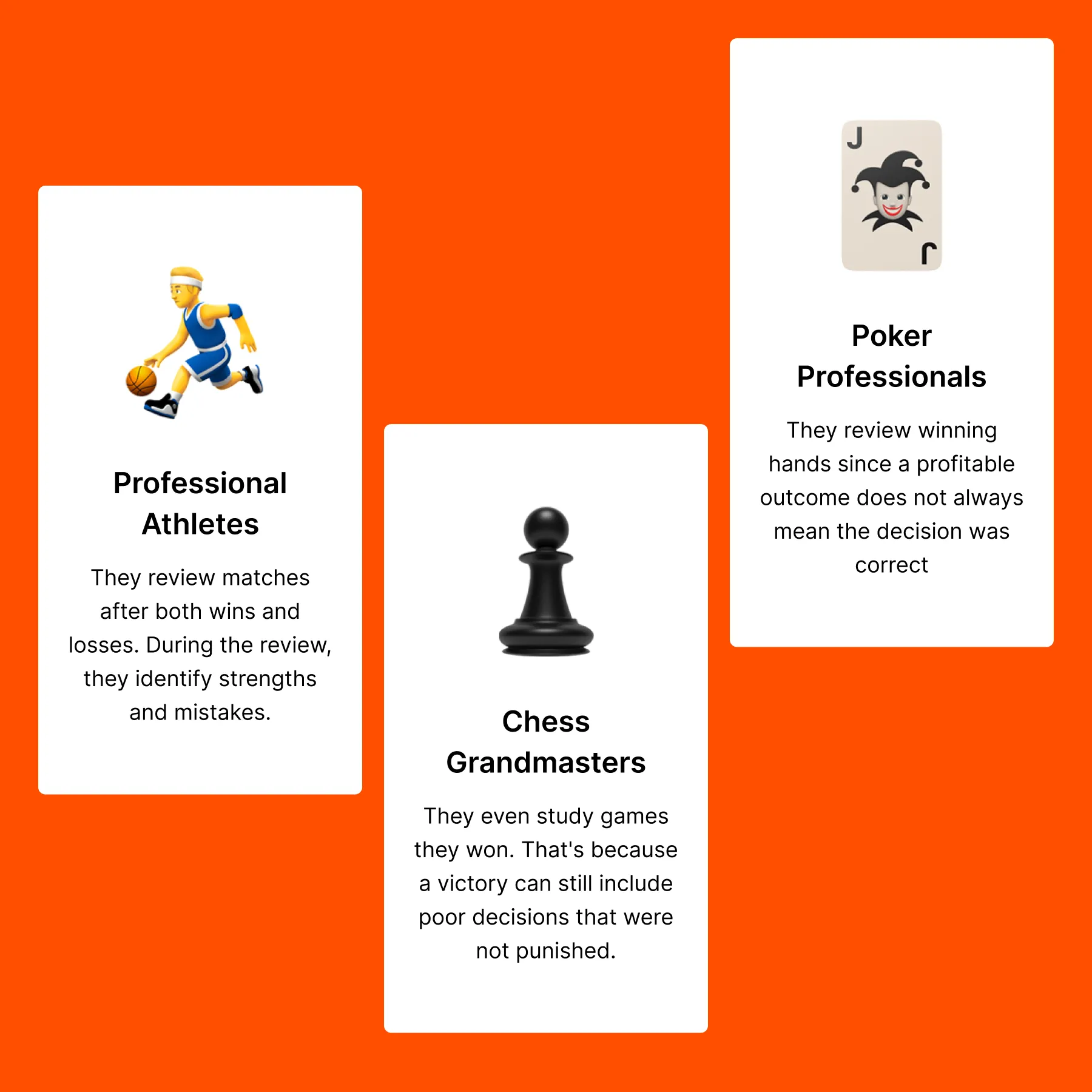
Trading follows the same principle because market feedback is mostly delayed and misleading. A poor trade can generate profits, while a well-planned trade can end in a loss due to normal market uncertainty. Therefore, successful trader habits are built around improving the parts of performance that remain under control.
As per general market understanding, these areas may include:
- Preparation
- Risk management
- Trade execution
- Post-trade review, and
- Trading discipline
By regularly analyzing these parts of the trading process, market participants can adopt a process-over-outcome trading mindset. It also creates a stronger base for long-term improvement than judging success through profits alone.
For more clarity, let’s study a hypothetical comparative example.
- One trader may earn large profits in a month through aggressive risk-taking and inconsistent decisions.
- Another trader may earn less but follows the same rules on every trade.
Although the second trader’s short-term results appear smaller, the repeatable trading process creates a stronger foundation for long-term success than temporary profits driven by luck.
What Process-Oriented Trading Actually Looks Like
Many traders hear the idea of process-over-outcome trading. However, it feels difficult to apply in daily trading. Note that it is not just a mindset. Instead, it is a way to measure the quality of the trading process rather than daily profits. In this technique, professional traders evaluate each trading session with several questions:
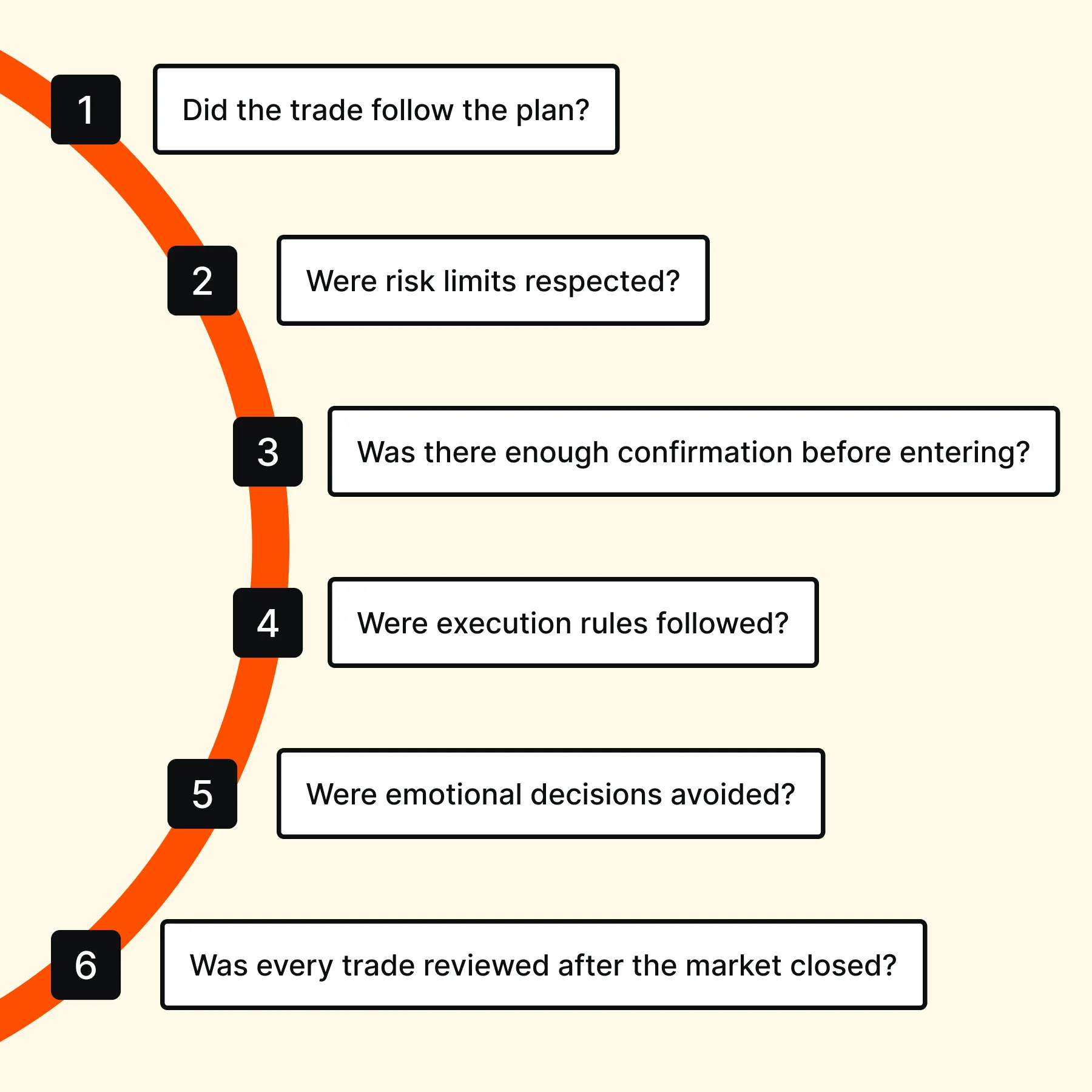
Notably, none of these questions depend on whether the trade made or lost money. Instead, they measure actions that remain under the trader’s control. This approach improves trading discipline and supports better trading psychology.
Many professionals also use “scorecards” to measure the quality of their execution. These scorecards track:
- Rule adherence
- Risk management
- Emotional control
- Preparation, and
- Post-trade review
Therefore, a trading day can end with a financial loss while still receiving a high score because the trading process was followed correctly. Consequently, this method creates a healthier feedback system.
Why Consistency Comes From Process, Not Prediction

Many traders believe better predictions lead to better results. Thus, they spend years searching for the perfect strategy, indicator, or market setup. However, long-term trading profitability depends less on prediction and more on following the same high-quality trading process in every market condition.
This happens because a strategy delivers value only when it is executed consistently. A trader with an average edge and strong trading discipline can outperform another trader with an excellent strategy but inconsistent execution. In many cases, the difference comes from:
- Proper risk management
- Patience
- Emotional control, and
- The ability to repeat the same process under pressure.
Furthermore, the trading process acts as a “stabilizer” when markets change. Market conditions may change from trending to sideways or from calm to highly volatile. Let’s see how a prediction-based trader and a professional trader following the “process over outcome” trading approach handle different market changes:
| When Markets Change | Prediction-Based Trader | Process-Oriented Professional Trader |
| Market Shifts From Trending To Sideways | Continues searching for trend trades or changes strategies after poor results. | Waits until the predefined setup appears again and follows the same trading process. |
| Market Becomes Highly Volatile | Makes emotional decisions or tries to predict every price swing. | Follows predefined risk limits, entry rules, and execution criteria despite volatility. |
| After a Losing Streak | Begins doubting the strategy and changes the trading approach. | Reviews execution, maintains trading discipline, and trusts the process over a large sample of trades. |
At the same time, process over outcome trading does not guarantee winning trades or remove losses. Instead, it keeps losses within planned risk limits and protects trading capital. Also, it may let traders maintain a healthy trading psychology.
Review Is Where Real Improvement Happens
Surviving the trading session is only one part of a trader’s work. Usually, real improvement happens through a detailed review of the trading process after the market closes. Most professional traders regularly examine their trades based on these three major parameters:
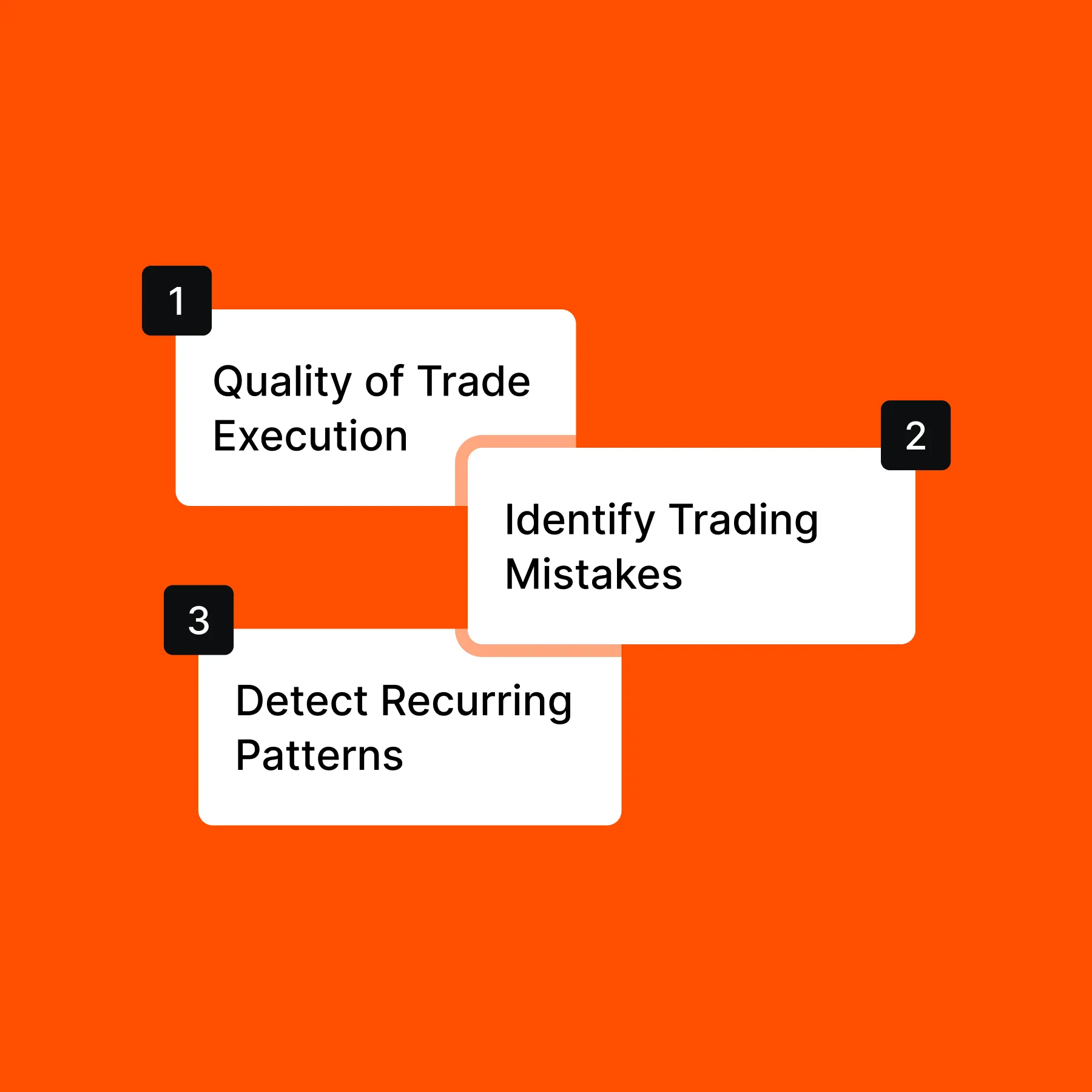
Over time, these reviews may reveal that losses frequently occur:
- During a certain time of day
- After a series of losing trades, or
- While chasing strong price moves
Without a detailed review of the trading process, these patterns may remain unnoticed. This can make it difficult to improve trading consistency.
Traders Can Benefit Using “Bookmap Replay Mode”
The Bookmap Replay Mode allows traders to revisit completed trades with full market context. This makes it possible to examine the following elements with high accuracy:
- Liquidity changes
- Absorption
- Execution timing
- Trade quality
- Missed market signals
As a result, every review creates a detailed feedback loop. Also, the insights gained can be applied to future trades. Such an application strengthens trading discipline and improves trading psychology. Traders may realize that without regular review, the same mistakes can continue for months or even years because there is no method to refine the trading process.
Trading success comes from repeatable decisions. Bookmap helps traders review and refine their process over time.
The Value of Accountability and Coaching
Even experienced traders have blind spots because emotions and personal biases can influence how trades are evaluated. As a result, “self-assessment” alone may not always reveal the real reasons behind repeated mistakes or inconsistent performance.
This is why coaching plays an important role in many performance-based fields. Athletes work with coaches, business leaders seek mentors, and professional poker players learn through study groups. Similarly, traders can benefit from “external feedback” provided by a trading coach. Let’s see how such coaches can help traders:
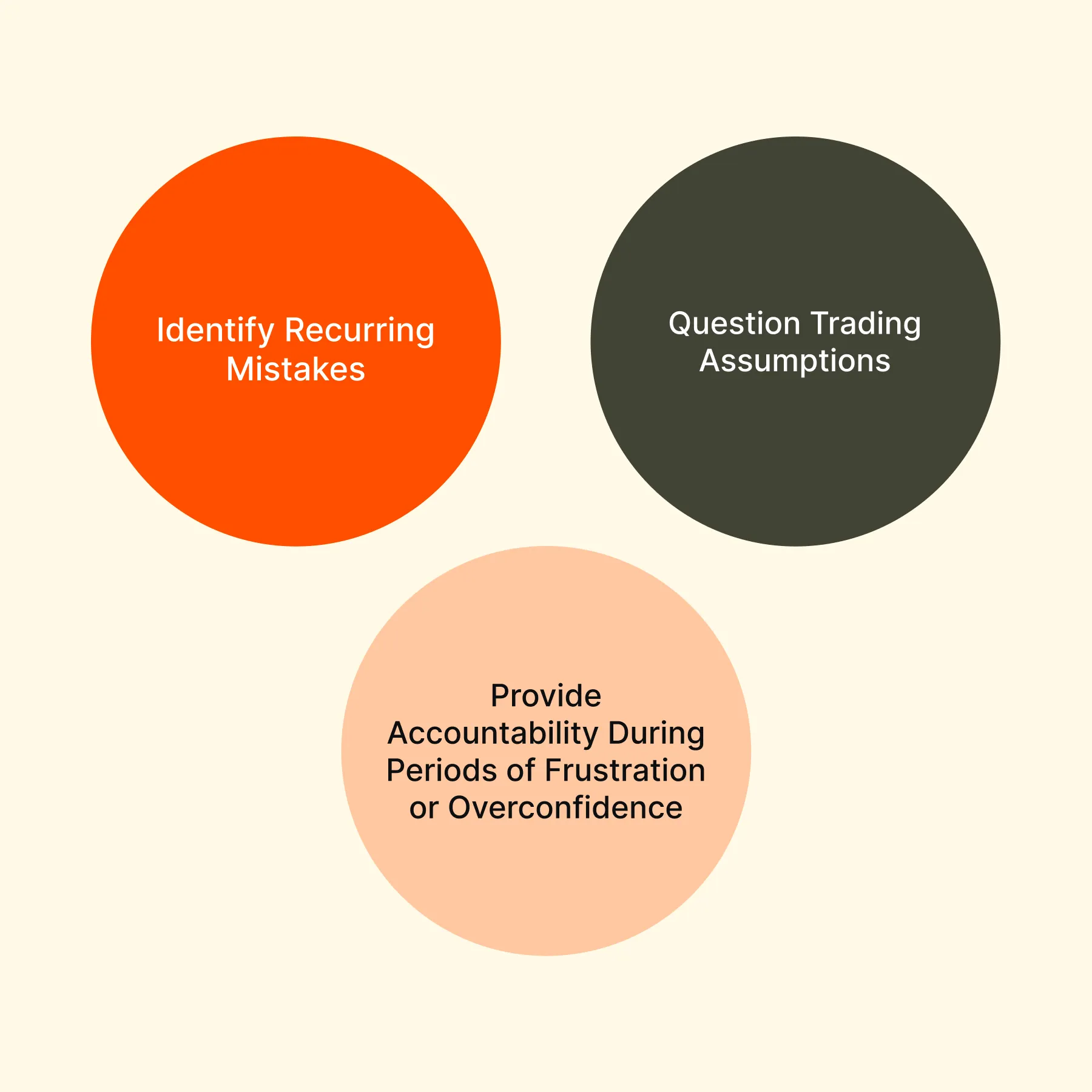
This outside perspective may build trading discipline and improve trading psychology. Bruce Pringle’s Pilot Program is one example of this type of coaching. In this program, traders can learn from Bruce Pringle, an experienced trader who has already navigated many common market challenges.
Rather than emphasizing short-term results, the program:
- Provides guided trade reviews
- Helps traders build their own trading edge
- Supports the development of a professional trader mindset
- Inculcates successful trader habits through detailed feedback
Ultimately, process-over-outcome trading becomes easier to develop when an experienced mentor helps identify weaknesses that may otherwise remain unnoticed. Want guidance from an experienced trader? Learn how Bruce Pringle’s Pilot Program helps traders build better habits, review performance, and improve execution.
For a better understanding, let’s also check a real trade based on Bruce Pringle’s TLBA setup (trendline break and accumulation) from the Pilot Program.
Real Trade Example
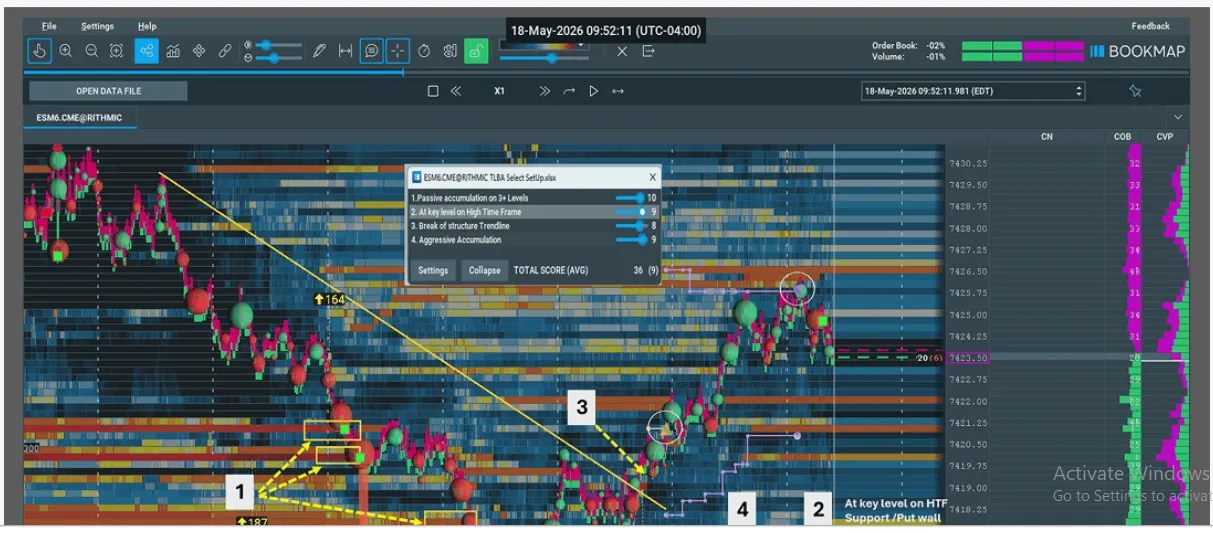
An example of process over outcome trading can be seen in this Bookmap Insights trade review. Although the market was choppy and highly volatile, the required conditions for the setup were still present. Let’s understand this example in detail:
A) The Market Entry
The market was choppy and highly volatile. But the trader did not enter based on random price movement. Instead, the position was opened only after the following conditions were met:
- Passive accumulation
- A higher-timeframe support level
- A break of market structure or trendline, and
- Aggressive accumulation
This trading process improves trading discipline and reduces impulsive decisions.
B) Entry Was Based on Confirmation (Not Prediction)
In the chart, a yellow trendline can be observed, which marks the existing downtrend. Once the price broke above this trendline, buying activity increased. It provides confirmation that the predefined setup was valid. Consequently, the trader took a long position above the breakout level near 7421.
Rather than trying to predict the exact market reversal, the trader entered a long position only after the breakout occurred. This reflects process over outcome trading, where decisions are based on predefined rules instead of assumptions.
C) Risk Was Planned Before the Trade
The trade also included a predefined risk plan. A 3-point stop loss was placed before entry and later adjusted according to changing price action. This demonstrates that risk management was part of the original plan rather than a reaction to market movement.
Such preparation supports long-term trading consistency because every trade follows the same trading framework.
D) The Real Lesson Comes from the Review
The biggest value of this example is not the final profit. Instead, the review evaluates:
- Whether the setup rules were followed
- Whether risk management remained consistent, and
- Whether the same execution could be repeated under similar market conditions
This type of post-trade analysis develops a professional trader mindset because performance is measured through the quality of execution rather than the final P&L.
Readers interested in similar examples can explore additional trade breakdowns on the Bookmap Insights page. Each review demonstrates how experienced traders analyze decisions, refine their execution, and improve the trading process through feedback.
Conclusion
Many traders believe long-term success comes from finding better predictions or chasing larger profits. However, consistent performance is usually built through a disciplined trading process that remains stable across changing market conditions.
Traders may also realize that the real measure of progress lies in the “quality” of decisions repeated over hundreds or even thousands of trades. This is the foundation of the process-over-outcome trading approach and the professional trader mindset. Regular review and healthy trading psychology usually create successful trader habits that support lasting trading consistency. Develop a more structured trading process with Bookmap’s visualization and replay tools.
FAQs
1. Can you be a profitable trader with a losing day?
Yes, a single trading day does not determine whether a trader is profitable over the long term. Note that markets operate on probabilities, and even a well-executed trade can end in a loss. This is why experienced traders evaluate the quality of the trading process instead of judging performance by one day’s P&L.
Usually, they follow a disciplined approach repeated across many trades. It is more important than the result of any individual session.
2. Why do some traders focus less on P&L?
Many experienced traders spend less time comparing the trading process vs profits because they recognize that profits are the result of many well-executed decisions over time. Daily P&L can change due to normal market uncertainty and may not reflect the quality of execution.
Instead, a professional trader’s mindset gives greater importance to:
- Risk management
- Rule adherence, and
- Disciplined execution
This approach may support stronger trading psychology and contribute to long-term trading consistency.
3. What should traders track besides profits and losses?
Profits and losses provide only part of the performance picture. A deeper insight into the trading process can be achieved through several additional metrics, such as:
- Rule adherence
- Average risk-to-reward ratio
- Trade duration
- Execution quality
- Emotional discipline
- Whether each trade matched predefined entry criteria
These measurements allow traders to identify recurring strengths and weaknesses while reinforcing successful trader habits.
4. How often should trades be reviewed?
Trades are generally reviewed after every trading session. Such a regular analysis helps identify patterns that may not be obvious during live markets. Usually, in a detailed review, a trader examines:
- Execution quality
- Rule adherence
- Risk management, and
- Recurring mistakes (instead of only the final outcome)
This habit improves trading psychology and supports long-term trading consistency. Continuous review also helps refine the trading process through lessons learned from both winning and losing trades.
5. Can coaching help improve trading performance?
Yes, many traders benefit from coaching because an experienced mentor can identify mistakes and blind spots that may be difficult to recognize through self-review alone. Besides, coaching also provides accountability and detailed feedback. Both support the development of a professional trader mindset and improve the quality of their trading process.
 Twitter
 Facebook